 Kenzam
 Steam Deck OLED vs ROG Ally X: Which Handheld Console Suits You?
Compare Steam Deck OLED, ROG Ally X, and the original ROG Ally on battery life, display, OS experience, and performance to choose the right gaming handheld.
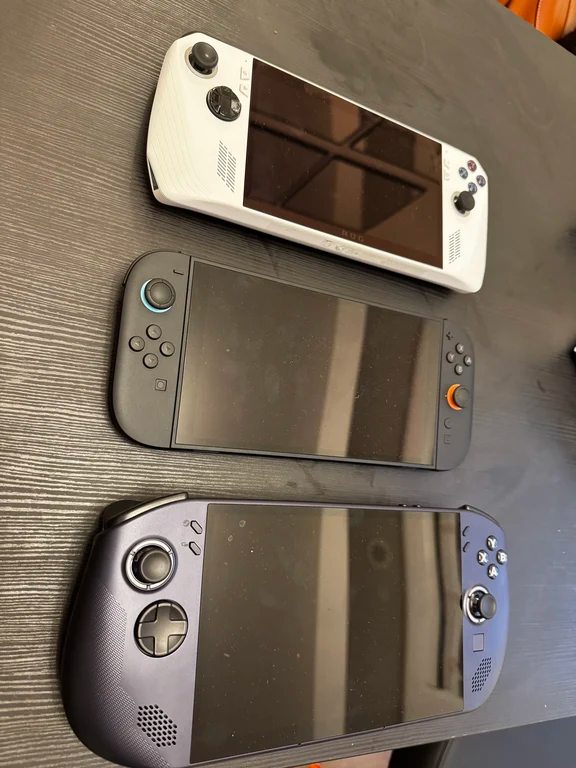
Choosing between modern handheld gaming devices often comes down to a core philosophy: do you want a pick-up-and-play console experience or a versatile handheld PC that lets you tweak every setting? The current market is defined by three primary choices: Valve's Steam Deck OLED, the upgraded ROG Ally X, and the original ROG Ally.
Main Models Overview
- Steam Deck OLED: The refined vision of Valve's handheld. It features a 7.4-inch 800p OLED display with vibrant contrast, a 50Wh battery, and an intuitive Linux-based interface designed to minimize troubleshooting.
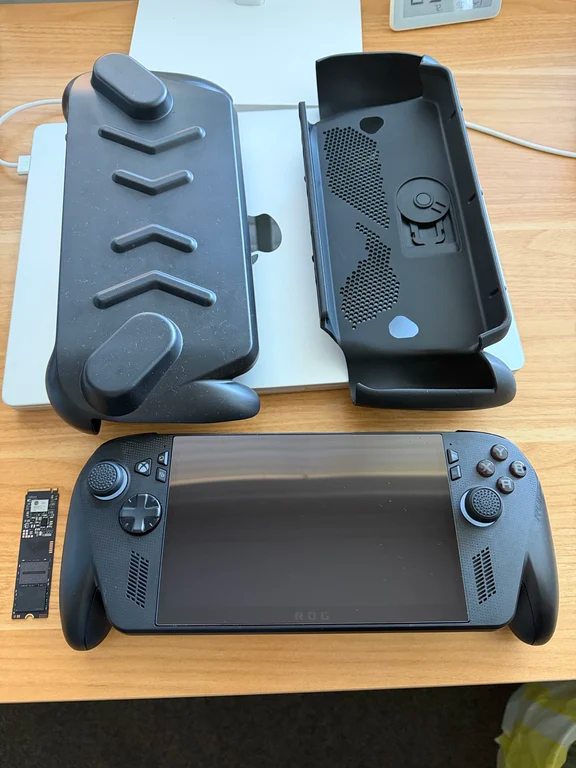
- ROG Ally X: Released in 2024 as a major upgrade, it packs an AMD Z1 Extreme chip, 24GB of RAM, an 80Wh battery, and a 7-inch 1080p 120Hz screen. It represents Asus's most capable Windows handheld to date.
- ROG Ally (First-Gen Z1 Extreme): A budget-friendlier entry point sharing core processing hardware with the Ally X, but limited by 16GB of RAM and a smaller 40Wh battery.

Battery Life Comparison
Battery capacity is one of the starkest dividers between these machines, dictating whether you need a high-wattage power bank for trips.
- Steam Deck OLED (50Wh): Valve's device excels at low-wattage efficiency. In lightweight indie games like Stardew Valley, it can run for 6 to 8 hours. Demanding AAA titles such as Baldur's Gate 3 at roughly 15W draw generally yield 2 to 3 hours.
- ROG Ally X (80Wh): With a 60% larger battery than the Deck, the Ally X offsets the higher power draw of Windows and its faster hardware. Heavy 3A games at 15W to 20W last about 2.5 to 3.5 hours, while lighter indie games can reach 6 to 8 hours, giving it stronger overall endurance across varied workloads.
- ROG Ally First-Gen (40Wh): The original unit struggles under load, yielding only about 1 to 1.5 hours in heavy AAA titles, making portable play without an external charger difficult.
Operating System and Usability
The software experience determines whether your device feels like a dedicated console or a desktop computer in your hands.
- SteamOS (Steam Deck): Built on a customized Linux base, SteamOS offers console-like convenience. It supports near-instant sleep and wake functions with the press of the power button, mimicking platforms like the Nintendo Switch. Dual trackpads on the front make mouse-driven strategy games intuitive, though the platform is less flexible for outside software.
- Windows 11 (ROG Ally series): The Ally platform functions as a full PC, supporting multiple game launchers, native anti-cheat games, and modding tools out of the box. However, managing Windows updates and desktop popups on a 7-inch touch display requires more patience.
Making Your Choice
If you prioritize effortless standby, refined ergonomics, and an OLED panel for library-wide Steam gaming, the Steam Deck OLED is the most frictionless option. If you need maximum hardware headroom, compatibility with launchers outside Steam, and extended battery life from an 80Wh cell, the ROG Ally X stands out. For gamers in Iraq tracking availability and pricing across local tech retailers, you can compare current store offers directly on Kenzam.
Source: [136]